To Seal or not to Seal?

To Seal or not to Seal

Is sealing always necessary?


Granite is a natural creation. One piece of rock is not like any other in the world. This is the one quality that actually makes this stuff so beautiful and in demand. The individuality of each granite slab is what lures so many homeowners into deciding on a granite countertop.

This also means that no two granite slabs have the same absorbent qualities.If all stone came from one quarry, it would be similar, but still unique. For example, Black Galaxy from Brazil may not absorb anything, whereas similar black granite from Asia may be a sponge.It does not matter where the stone is located in your design, it can be a vanity top, kitchen countertop, fireplace surround, island top, or floor tile. If its natural stone, then there is a chance it might need sealing.

What does that tell us? Not all granite or marble will take a sealer. If a stone cannot absorb anything, even an impregnating sealer won’t sink in. Impregnating sealers sit below the surface of stone and deposit solid particles into the pores to coat the individual minerals below. The good news here is that if a sealer won’t penetrate into the stone, neither will a stain. An example is Ubatuba granite: it’s very bulletproof and usually does not require any sealing. Sealer generally does not penetrate this stone and is useless, leaving a hazy film on the surface.

This may come as a surprise to many in the countertop industry. If you go to any home show and ask counter- top salesmen that sell anything other than natural stone what makes their product better than stone and you will always get the same answer. They will all say that stone needs to be sealed every six months to once a year but their countertop surface doesn’t require this “inconvenience”.

The need for sealing every granite, and sealing it often, is a myth and absolutely untrue. These kinds of tales are born from fears and insecurities, or specifically designed to prey on such concerns of homeowners. Everyone loves stone, but there is a certain mystique attached to it that scares the people who know little about it. These scare tactics make granite owners afraid to do anything with their granite stone because if it’s ruined, it’s too expensive to replace. The competition tries to pull away potential customers from getting a stone top by over exaggerating the need for sealing granite and marble countertops.

If this is the only perceived weakness of granite countertops for potential buyers, it’s easy to spread the scare that “all granite needs to be sealed.” It makes sense to them and is a compelling reason for you to buy the competitor’s product instead of granite and other natural stone.

In reality, a small percentage of the commercially available polished stone used for countertops needs a sealer. A low percentage really needs to be sealed because granite is the main stone variety in use, and not all granites are fully absorbent. You can see this on something as simple as a granite boulder in a park or field; after it rains, it doesn’t stay wet. It dries instantly.

Homeowners and fabricators can make the same test. Leave water on a slab for 10-15 minutes and then remove it; if water doesn’t darken the stone when it’s removed, the granite won’t absorb water-based staining material. If you’re shaping an edge on a granite top by working wet, and the stone doesn’t stay dark when the water is removed, it won’t absorb a water-based sealer, either.

You can use a solvent test to see if a solvent- or petroleum-based stain will enter the granite. Simply dab some mineral oil on the slab and leave for 5-l0 minutes. If, after you remove it, it doesn’t darken the stone, neither will a staining agent.

If it does go dark, no worries about damaging the granite with the test; the mineral oil will completely evaporate, leaving the stone its natural color. But, this will tell you that you can use a solvent-based sealer to protect against oil—based stains.

In short, if the granite goes dark with either water or mineral oil, then seal. lf there is no color change alter testing with these two liquids, you do not really need a sealer on your granite countertop.

This test works for granite and almost all other stones, although there’s a caveat here for marble; an impregnating sealer will not protect marble against those nasty water rings and spots.

They aren’t stains, no matter how bad a customer wants them to be stains; they’re etches or corrosion. lt’s a chemical reaction between the calcium in the granite or marble and the acid in the product that caused the etch.

Think of your favorite shirt in the laundry. When you spill water or oil on it, it goes dark. If it stays dark, it’s a stain. If it loses its color, it is bleached out or white, as the dye or color from the thread is gone.

On marble, the surface of the stone is corroded, leaving the stone in its real natural state or its unfinished look. No amount of sealer will bring the color back, it needs to be resurfaced.

It’s also important to emphasize that this applies to commercially available polished stone. When stone is polished, the pores are tighter and restrict the ability of liquids to enter. With honed surfaces, liquids can enter some of the less absorbent stone more freely and therefore require an impregnating sealer.

One of the usual questions to pop up is, once you determine if` you’re going to seal granite, how often to do it? This answer is the easiest: When your countertop no longer repels water or oil. The field test is that, after washing the dishes, a customer starts to notice the stone is darker with moisture and then getting lighter a short time afterwards, it’s time to re-apply (not coat) with the brand of sealer used originally.

Reputable fabricators like All Granite and Marble Crop value their customers and will seal marble and granite that need sealing when installation is complete. They also show the homeowner how to properly seal natural stone so no mistakes are made in the future. Any sealer worth its weight in gold should last you at least one year, even with the most-porous of all marble and granite. As far as lifting the mystery of sealing stone: Seal when needed, and try to use products that don’t require frequent repeat applications. In this case, more is not always better.

  • Jane

    Is “Green Galaxy” granite from Brazil a porous granite or not?

  • admin

    Jane: It’s not more porous than the average granite. I recommend to seal this stone once a year to keep it stain resistant.

  • http://Marble.com Marue

    Is “blue eyes” a better choice (more resistant to stains) than “volga blue?
    And is granite that is white in color very porous?

  • admin

    Marque: Natural stone is porous by nature and must be sealed once a year. The Blue Eyes and Volga Blue granite have a similar porosity level. Lighter granite is sometimes more prone to staining, but it’s nothing that a strong sealer cant’ take care of.

  • William

    I have been told that after they put my new granite countertop in they can’t put sink in for 24 hours.Is this a noral practice?

  • admin

    William: The sink is installed with the countertop. It’s recommended that you don’t use the sink for 24 hours so it will set-in.

  • LT

    Can chemical substances like clorox,insect killer spray or fuels damage a granite top?
    can I use floor wax to seal the granite counter top

  • admin

    LT: These substances may damage the granite countertop. Please do not use any harsh chemicals on natural stone. In addition, floor wax should not be used to seal granite, a specifically formulated granite sealer either in a water or solvent based form is recommended.

  • Roberta

    I just had my granite installed Thursday (Kashmir White) and have an oil stain. How do I remove it?

  • admin

    Roberta: I recommend an appropriate oil stain remover to do the job correctly. Try this: http://www.mrstone.com/stone-care-products/restoration/dupont-stonetech-oil-stain-remover.html

  • Juli12316

    http://www.xmjuli.com
    Granite Kitchen Counter Top and Granite Bathroom Vanity Top

  • Debbie

    Is Brown Antique a very porous granite? Will much have to be wasted or “cut around” when they fabricate it because of the way it has “crystals” instead of veins? Thanks

  • http://www.marble.com Marble.com – Kinga

    Natural stone is porous but with proper maintenance and sealing, you will not have a problem with its porosity. As far as waste is concerned, you have to talk to your fabricator for him to determine the amount of waste your project will produce. It depends on the shape, size, custom cuts, cutouts involved and so on.

  • LOAMA

    We had installed a light grayish granite top. It has been sealed many times with 5-11 and still leaves a dark spot when something is left on top of water on the counter. What can be done to seal the counter?

  • http://www.marble.com Marble.com – Derek

    As Kinga mentioned, it depends on the fabricator and what is their policy on cutting the stone. With us, we let the customer pick how the countertop will be cut on the slab, and our technicians inspect the stone before it is fabricated to make sure of the integrity of the stone.

  • http://www.marble.com Marble.com – Derek

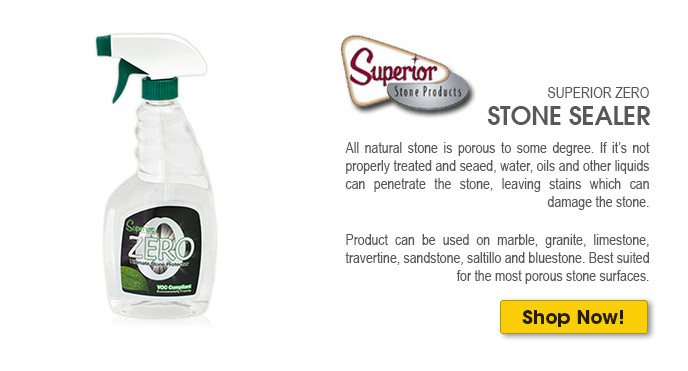
    That’s very odd. If water darkens your stone then it means that it was not sealed properly. Keep sealing. We recommend Superior Zero Ultimate Stone Protector: http://www.mrstone.com/stone-care-products/sealers/zero-ultimate-stone-protector-in-spray-bottle

  • Littlealex820

    Do you recommend a particular sealer for honed carrera marble countertops?

  • http://www.marble.com Marble.com – Kinga

    Check out MrStone.com and try out the Dupont StoneTech Bulletproof Sealer.

    http://www.mrstone.com/granite-sealers/dupont-stonetech-bulletproof-sealer.html

  • http://www.marble.com Marble.com – Derek

    I recommend a heavy duty natural stone impregnator such Dupont StoneTech BulletProof Sealer. We have numerous options of strong sealers on http://www.MrStone.com you can purchase directly on-line.

  • Rivalee

    I just installed “Taupe White” granite like this http://www.thegraniteplace.net/encapsgallery/catalog.php?action=show_custom&id=417&cat=0 and would like to find out more about it. Is there a site that tells more about the porosity of different stones, resistance to etching, etc? What might you know about this particular stone? Thanks!

  • http://www.marble.com Marble.com – Derek

    We unfortunately do not have the technical specifications on the stone that you’re referring to.

  • Mboyeson

    We just installed a “rain forest” marble island countertop. Our fabicator recommended against sealing this marble. If a drop of water is left on the countertop for one minute, it still has its bubble shape. However, when it is wiped off after a minute a dark stain remains that eventually dries up. This would seem to require a sealer to prevent liquid stains. That being said, if tomato juice gets on the countertop, then a chemical stain/etching will occur whether or not you have used an impregnator or water based sealer, correct?

  • http://www.marble.com Marble.com – Derek

    Etch marks are caused by acids left on the surface of the stone. Some materials will etch the finish but not leave a stain. Others will both etch and stain. A stain can be caused by many liquids or oils that soak into the stone because of the stones low porosity levels. You can and should seal your marble and this will prevent staining, but it will not prevent etching. To minimize etching, wipe up all spills as soon as possible. Hope this helps.

  • Jayksmom

    We are about to have our countertops installed in Ivory Fantasy. Our installer told us that they would be sealed initially, but recommended re-sealing after a few days and then again in about 6 months…just to be sure. He recommended Miracle 511, but without an impregnator so that the granite is not darkened. Does such a thing exist? The only thing I find is an “Enhancer” Is this not the same thing? We prefer the lighter color than the dark grey it turns to when wet. With so much (mis)information/horror stories out there, something that started off as exciting is quickly becoming very frustrating! We are just trying to start off on the right foot in order to protect our investment before we create any problems. Thanks so much!

  • http://www.marble.com Marble.com – Derek

    We offer a product without the impregnator that should not darken your stone when sealed, you can purchase it here: http://www.mrstone.com/granite-sealers/dupont-stonetech-bulletproof-sealer.html I think you will be fine to just seal the stone upon installation then once every six to twelve months. In addition, I recommend to test out the sealer on an inconspicuous small area of the counter first and see how you like the results. Good luck!

  • http://www.marble.com Marble.com – Kinga

    Although, Derek is 100% right about re-sealing it every 6-12 months, I recommend you reseal your countertop after the installation just in case your installers accidentally missed a spot. If you feel more comfortable, resealing it every 3 months is also ideal. Sealing protects the stone against staining so it’s important to periodically reapply it. Mrstone.com has many fantastic maintenance products including the AGM Daily Cleaner. The AGM Daily Cleaner contains a small amount of sealer so every time you clean your countertop, you apply a small amount of sealer which helps to keep your stone clean and sealed in-between your regular sealing. Hope this helps!

    KEEP YOUR STONE BEAUTIFUL WITH MRSTONE.COM
    http://www.mrstone.com/granite-cleaners/agm-daily-granite-cleaner.html

  • Jayksmom

    Thanks to both of you for the quick reply….we will definitely be following your guidance!

  • http://www.marble.com Marble.com – Kinga

    Like Derek mentioned, always test any product you purchase in an inconspicuous area to ensure you are satisfied with the results. If you need anything else, do not hesitate to ask! Good luck!

  • Juli12316

    kitchen granite countertops_bathroom granite vanity tops_quartz countertops
    here you go :http://www.xmjuli.com

  • Pat

    I just had new granite countertops installed on Thursday. Waited the 24 hrs. to install faucets. Used the sink last night and where the cut out is for the sink the granite turns dark but will lighten when it dries. I asume that this needs to be sealed? Also where the bullnose edge is the granite seems about 4-5 shades lighter than the top. Is this normal?
    Sorry I do have one more question…. I have absolute black granite on the bathroom floor. Some say this should be sealed others say not to seal it. Its been down about 2 yrs. now. While I was sealing the kitchen counter thought I would also do the floor if needed. Thanks, Pat
    P.S. It was a pleasure working with such great people in your company, and the countertop looks great !

  • http://www.marble.com Marble.com – Kinga

    Even though we do seal every stone we install, it is highly recommended to re-seal the stone again before you begin to use it. When the granite turns dark and dries up, you definitely need to re-seal it http://www.mrstone.com/granite-sealers/superior-zero-line-impregnating-sealer.html. Keep in mind some stones absorb liquids quicker than others which indicates you should seal more often (every 3-6 Months). It is perfectly normal for the edge be to lighter than the surface. Take a look at a photos I attached for your reference. Thank you for your kind words. We are always happy to hear from satisfied customers! As far as your floor, you should seal it even though it’s dark. The Superior Zero Line sealer is water based so it will not change the look of your tile. Always remember to test every product in an inconspicuous area before you apply it to the entire floor or countertop to ensure you are satisfied with the result. Hope this helps!

  • http://www.marble.com Marble.com – Derek

    There are multiple sealers that we highly recommend to keep your stone looking evenly finished and stain resistant, you can look at the whole selection here: http://www.mrstone.com/granite-sealers.html and you can read some more literature on sealing natural stone here: http://www.marble.com/articles/sealing-in-the-beauty-of-natural-stone/ Hope this helps & thank you for your kind words.

  • Chaz

    So the article states: “Any sealer worth its weight in gold should last you at least 5 years, even with the most-porous of all marble and granite.”

    And then you marble dotcom guys comment multiple times that people’s countertops need sealing every 6-12 and even 3-6 months.

    Which is it?! Am I the only one that read the article?

  • http://www.marble.com Marble.com – Derek

    Chaz,

    Sealer application is a tricky situation. Stones have various levels of porosity, for example a dark stone such as Absolute Black requires minimum sealing and would possibly be fine for five years, while a light stone such as Kashmir White requires more often sealing every six to twelve months. We recommend sealing every six to twelve months because of the golden rule: better safe than sorry. Because sealing is such an easy do-it-yourself application and there is no such issue as “over-sealing” a stone (the excess sealer can simply be wiped off the countertop), we recommend more frequent sealing to make sure your stone stays stain resistant as we want the customer to have peace of mind and not worry about stains. The reason why a five year sealing recommendation was in this article for so long is because when compiling the article we leaned on sealer manufacturers suggestions. Many sealer companies are so confident in their product and strength of the sealer, that they recommend long periods before they feel resealing is appropriate. After review of this article, we do not agree with that stance and therefore will adjust the contents of this article in the areas of reseal time to fall in line with our normal recommendations. Hope this clears up the issue and we’re sorry for any confusion.

  • Rideas

    We did a bathroom remodel, and we selected a honed Carrara marble for the floor. It looks beautiful. What do you recommend we use to best seal and protect it’s beauty?

  • David

    I am currently looking into purchasing Clasic White or a similar dominant white kitchen counter top. Obviously my biggest fear is staining. Lets say for example a bit of red wine is spilled and sits over night, would this be an issue if the top is sealed to reccomendation? Is disscoloration from such things a common problem? Finally, can proper sealing 100% prevent staining from common kitchen liquids, oils, juices?

  • http://www.marble.com Marble.com – Kinga

    You can use Dupont StoneTech BulletProof Sealer from MrStone.com. Like with any natural stone, you always want to test the product in an inconspicuous area to make sure you like the results. Good luck! http://www.mrstone.com/granite-sealers/dupont-stonetech-bulletproof-sealer.html

  • http://www.marble.com Marble.com – Derek

    In addition, on the MrStone.com website, the Superior Line Stone Impregnator & Protector is also a very solid and heavy duty sealer from my personal experience, so either one would be great to lower the porosity level on the surface of your Carrara floor.

  • http://www.marble.com Marble.com – Derek

    My best answer would be for you to acquire a sample yourself, seal the sample, then try to stain it by leaving that red wine spill on it and analyzing the results. I want you to have peace of mind and make sure you purchase a stone that you’re comfortable and happy with. What I can say is that we install many Classic White kitchens and have not had any major issues. We recommend to reseal every six months to be on the safe side. Hope this helps.

  • 1miletoo

    I am not concerned about stains on my granite counter top. Do I still have to apply sealant? If one doesn’t apply sealant, does it affect the longevity of the granite? Or do we seal ONLY for aesthetic reasons?

  • http://www.marble.com Marble.com – Kinga

    Sealing prevents staining of the countertop. The best way to prolong the life of your granite is to use gentle cleaning solutions like mild soap and water or the AGM Daily Granite and Marble Cleaner http://www.mrstone.com/granite-cleaners/agm-daily-granite-cleaner.html

  • http://www.marble.com Marble.com – Kinga

    Sealing prevents staining of the countertop. The best way to prolong the life of your granite is to use gentle cleaning solutions like mild soap and water or the AGM Daily Granite and Marble Cleaner http://www.mrstone.com/granite-cleaners/agm-daily-granite-cleaner.html

  • http://www.marble.com Marble.com – Derek

    You have to ask yourself the reason why are you reluctant to apply sealer. If you fear that it’s a high amount of maintenance, then we can tell you this is false because sealing a countertop will only take maybe 15 minutes and it’s a very easy do-it-yourself process. If it’s because you do not care about the look of the countertops because it will be in a heavy work area or in the basement or something like that, then I recommend to use a darker that is low porosity, such as Absolute Black or Ubatuba. You can get away with not sealing stones such as those, because they do not really absorb stains as lighter granite’s do. Hope this helps.

  • Linda

    We recently purchased a home with counters which I believe are granite, not marble. They are highly polished. You state in your article that the counters should have “the brand of sealer used originally” reapplied. I have no idea what was used. Does it really matter, or will I make matters worse using the wrong product? Also, the counters have what I would describe as “etching” in circular patterns such as a pot would make. Does this happen to granite too (your article mentions this etching problem as a marble issue), or am I wrong about the material?

  • http://www.marble.com Marble.com – Derek

    It does not really matter that much if you use a different sealer than originally applied to reseal your countertop. You will be fine with using another strong, efficient sealer. Your granite should not generally etch because granite is a siliceous natural stone and not highly reactive to acids like a marble or limestone. However, the sealer may etch on the surface so this is possibly what could be happening. In addition, there is a natural stone called quartzite out there and it’s sometimes categorized as granite because it’s generally as durable as granite, but it may etch. Hope this helps!

  • Bob

    We are installing a small piece of calcutta gold honed marble on a built in bar/buffet cabinet. I want to seal it but do not have anyplace to test the sealer to see if changes the color of the marble. What would you recommend?

  • http://www.marble.com Marble.com – Derek

    Many places let customers acquire samples and you could use one of those for your testing. For example, we offer free samples for pick-up of virtually any stone we have and you do not have to place a commitment to order.

  • Jamie

    I have granite tile in my kitchen that is 7 yrs old. From day one i noticed the water marks and if anything with grease or oil in it was set on it, it would sink in and darken. Ive tried 3 difference sealers including an impregnato. This is a beige with specks of blk and darker beiges. I also spilled grape juice which was cleaned immeditaly, but left a huge dark spot. I feel like i cant use my kitchen at all in fear of stains! Please help!

  • Dave

    Our kitchen is done in Caladoinia granite. we have noticed that the area that is most used is darker than the places that are not cleaned eveyday i.e. under the canisters, toaster and what not. it has been like this since the first year. We have only used water and dish soap to clean it. is there a way to get it back to a consistant color? to be honest we kind of like the darker color. but we are thinking that perhaps we need to seal it again as well. any suggestions would be welcome

  • http://www.marble.com Marble.com – Derek

    If you sealed the stone and it’s staining so horribly, that’s very odd. Could you share what sealers have you tried? The strongest sealer that we know of and recommend is the Superior line “ZERO” Ultimate Stone Protector: http://www.mrstone.com/stone-care-products/sealers/zero-ultimate-stone-protector-in-spray-bottle

  • http://www.marble.com Marble.com – Derek

    It seems to me like it’s time for the countertop to be sealed again to stay stain resistant. As far as cleaning maintenance goes, the best product we recommend that you use is the following: http://www.mrstone.com/granite-cleaners/agm-daily-granite-cleaner.html

  • Awei

    My kitchen has black galaxy granite and i just used 511 impregnator sealer to seal it. Now there is a terrible haze on it that won’t go away. I read that black galaxy didn’t need to be sealed. What do i do now/!?

  • http://www.marble.com Marble.com – Derek

    Absolute Black is a stone that has a very low porosity and seldom needs to be sealed. The sealer may just lie on the surface of the stone and cause visible streaks and haze, which is what I think happened in your situation. The haze is the sealer that was allowed to dry. You usually can remove it by applying the sealer again and wiping it all off (yes, lots of wasted sealer). If that does not work, then you could try buff it off w/ a piece of 0000 or 000 steel wool. The third option is cleaning it with acetone and allowing it to dry, but there is a chance this could damage the stone.

  • Robert

    I had Kashmir White granite installed yesterday in my kitchen. We had hand picked a slab that had very little of the black vein in it, however once it was installed and sealed it appears to have a ton of black vein. The company is saying they used the slab we hand picked, however my wife and I are not convinced and based a lot of other things on having very little black in the granite. Now we’re unhappy with it and the company is refusing to help! Is there a way to lighten up te black in the granite? Or is that just “part of the natural beauty,” like the company keeps saying? Should we just be happy or prepare to go to battle?

  • Rue

    I just had granite installed on my kitchen countertops. I was told by the project manager that the sealant was put on my granite before installation at the shop but when I look at my countertops I see water marks like it was left out in the rain. What should I do?

  • http://www.marble.com Marble.com – Kinga

    You have to keep in mind that slabs sometimes look different standing up vs. cut and installed (laying down). The colors and veins may look different in your house from what you remember at the time of the actual selection at the facility. There are many factors to consider: were you outside for the selection? If so, was it cloudy, rainy or sunny? Outdoor selection is sometimes tricky as lighting makes a big difference in the final result! If your selection was indoors, the lighting may have been poor or too intense as opposed to your own lighting which also makes a difference in the end result. There is no way to lighten up the black veins- it’s a natural, beautiful part of granite. I don’t see a reason why your fabricator would deceive you. Generally, if something happens during fabrication like the stone breaking for any reason, fabricators tend to inform their customers of any mishaps so they can select another piece to avoid dissatisfaction with the stone and end result. I do agree that the black veins are a part of the natural beauty of your stone so you should embrace and enjoy your granite. Hope this helps!

  • http://www.marble.com Marble.com – Kinga

    Sealing helps prevent stains from forming on your countertop. Once it’s cleaned and sealed, most common spills are no match against your sealer as long as you re-seal it once every six to twelve months and always wipe spills as they occur. What did you use to clean your countertop after it was installed?

  • http://www.marble.com Marble.com – Derek

    In addition to Kinga’s detailed answer, the slab should be marked as yours and the one you picked should be the one you received. It’s hard for us to say if anything deceitful happened here because we do not have pictures to look at for comparison. We really cannot comment on order processes of other companies, but we always give our customers a sample from the same shipment of slabs they chose their countertops so the client has a point of reference at all times.

  • http://www.marble.com Marble.com – Derek

    Was the countertop installed by us?

All Granite and Marble Corp.™ © 2004 - 2011 All rights reserved..
Privacy Policy